
Overview
Gastric bypass surgery, medically known as Roux-en-Y gastric bypass, is one of the most established and extensively studied bariatric procedures worldwide. It is designed to help people with obesity achieve significant, durable weight loss while also improving or resolving many obesity-related health conditions.
This procedure works through a combination of stomach restriction and metabolic (hormonal) changes, making it especially effective for patients with severe obesity or obesity-related diseases such as type 2 diabetes.
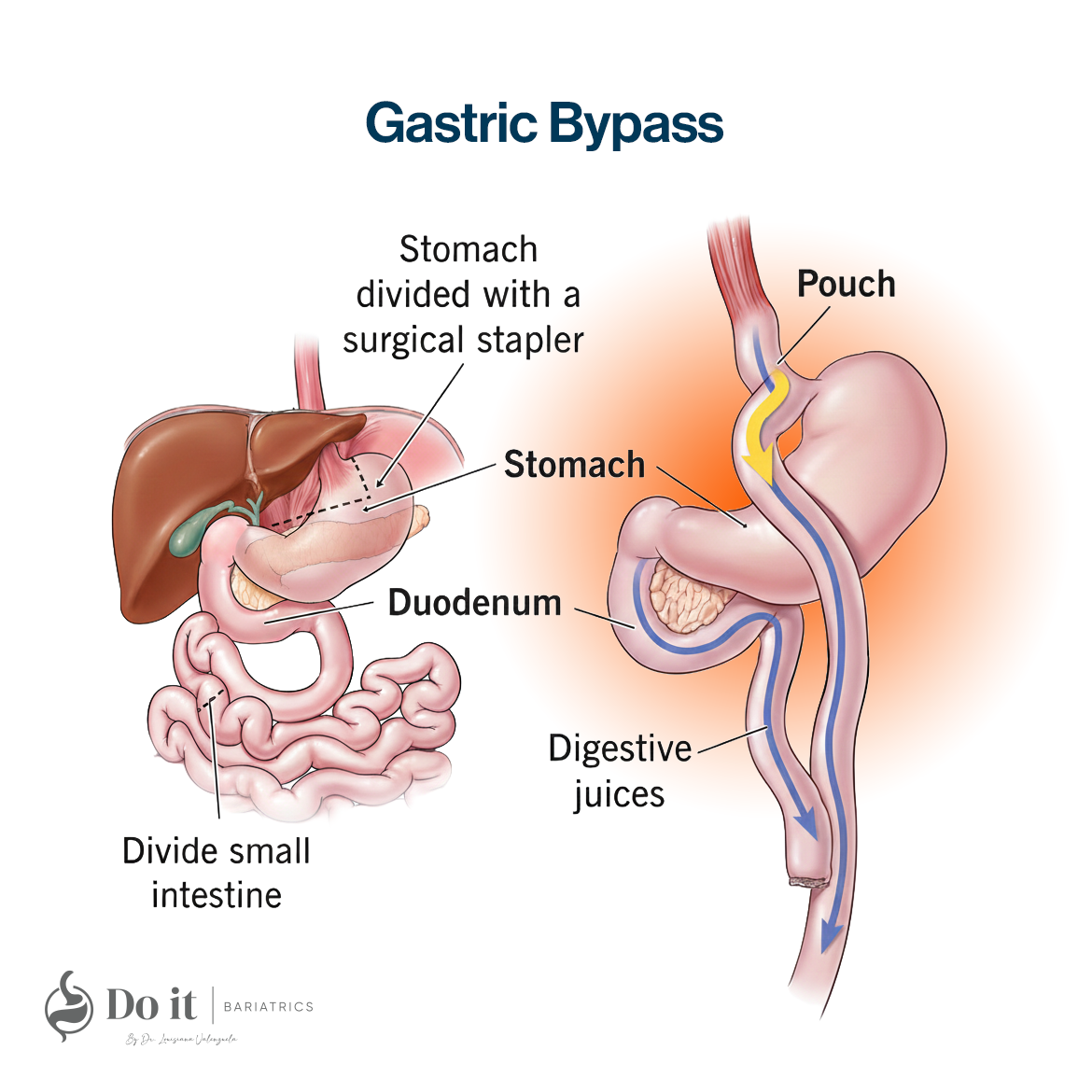
What Is Gastric Bypass Surgery?
During gastric bypass surgery, the stomach is divided to create a small upper pouch, about the size of an egg. This pouch is then connected directly to a portion of the small intestine, allowing food to bypass most of the stomach and the first part of the intestine.
Because of these changes:
Patients feel full after eating much smaller portions
Gastric bypass is considered both a restrictive and malabsorptive procedure and has been performed for decades with well-documented long-term outcomes.